What Is the Closed on Sunday AI Trend? The Choir, Explained
 Closed on Sunday AI Team
The October 2026 Closed on Sunday AI trend: the 2019 choir scene it remakes, why it spread, and what the AI versions change.
Scegli un coro qui sopra o scrivine uno tuo. Modificarlo ricostruisce il prompt predefinito.
Carica solo foto tue, del tuo animale domestico o di persone che hanno acconsentito a comparire. Nessun personaggio famoso o minore.
Mantieni nel prompt il fermo immagine principale e il coro. Descrivi il soggetto, la folla e la luce.
480p · 12s costa 15 crediti. 720p · 12s costa 30 crediti. 1080p · 12s costa 60 crediti. Le clip più lunghe scalano e vengono arrotondate per eccesso.
Questa clip: 15 crediti · 13 clip/mese con Pro ($39.90) o 160/anno ($319).
The Closed on Sunday AI trend is a wave of short AI-generated videos that recreate the choir scene from the 2019 "Closed on Sunday" music video, usually with a different person standing still in front of a swaying choir. It took off around 14 October 2026, and the format is simple enough that almost anyone can make a version in a few minutes. This guide explains where the scene comes from, why the remake spread, and what the AI versions actually change.
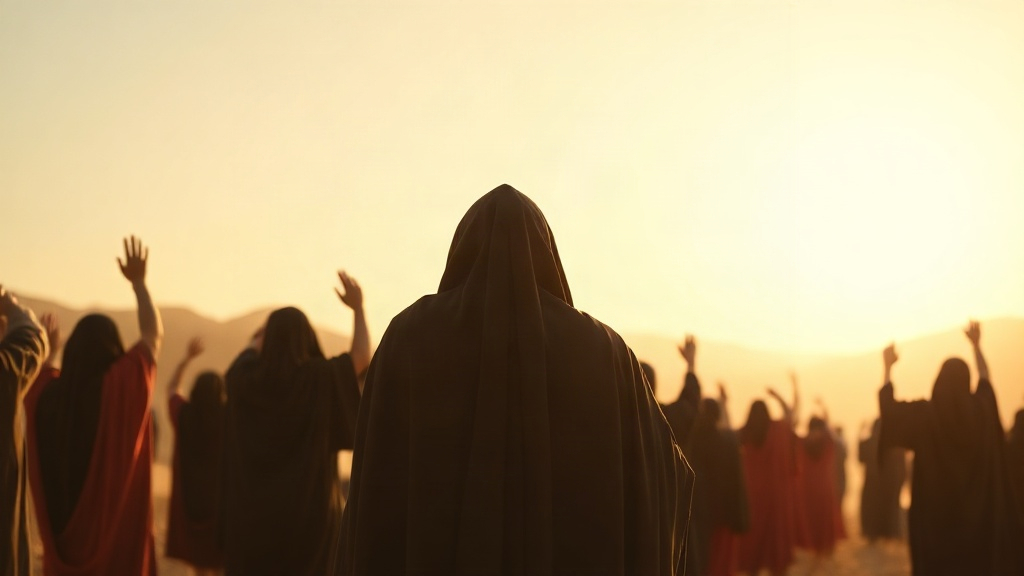
The trend is a remake, not a remix. People generate a new 12-second clip that copies the composition of the original choir scene — one person standing still in the foreground, a choir moving behind them — and swap in their own subject, their own choir, and their own light.
Nothing about the original recording is reused. The clips are silent MP4s, so there is no song in them at all. If you are looking for the one-paragraph version to send to someone: it is a visual format, borrowed framing, new faces, no audio.
The music video for "Closed on Sunday" was released on 28 November 2019. The section the trend borrows is the choir ending, and it is unusually plain by music video standards:
- One continuous shot. The camera does not cut away. It drifts slowly and holds.
- A still lead. One person stands in the foreground and barely moves — no choreography, no gestures to camera.
- A swaying choir. Behind them, a group moves together in a slow, steady sway.
- Flat, warm light. The lighting is even and undramatic, which keeps attention on the contrast between the still figure and the moving crowd.
That is the whole recipe. There is no plot, no location change, and no effect work to speak of. It is a composition, and compositions are the easiest thing for an AI video tool to reproduce.
The remake trend took off around 14 October 2026, roughly seven years after the video came out. Two things made it catch:
The reference is short and static. A single continuous shot with a fixed camera position gives a model a clear target. You are not asking it to invent a story, a cut, or a camera move. You are asking it to hold a frame and animate a crowd.
The format survives a bad render. If a generated choir looks slightly wrong, the clip still reads as the trend. That is rare. Most video formats fall apart when the details are off; this one is carried by the arrangement of bodies in the frame.
It also helps that the joke is legible in about one second of scrolling. You do not need context to get it.
The whole thing rests on contrast. A calm figure in front of a moving crowd is funny in the same way a person standing still on a dance floor is funny — the mismatch does the work.
A few things make that contrast land:
- Calm inside noise. The choir is doing the emotional labour. The lead is doing nothing, deliberately.
- The deadpan. A still face reads as unbothered, which reads as confident, which reads as a joke.
- Scale. One person against a full choir is a visual imbalance. Imbalance is inherently a little absurd.
- No reaction. The lead never acknowledges the camera or the crowd. The bit only works if they commit to not performing.
This is why the trend travels so well with pets, babies, and people in ordinary clothes. The further the lead is from a choir setting, the bigger the contrast. Our guide to making one with your pet covers the extreme version of that.
Almost every remake keeps the skeleton and replaces the surface. The three things that change most:
The lead. This is the variable people care about. It might be a selfie, a friend, a dog, a mascot, or a completely invented character. The only requirement is that the subject can plausibly stand still for twelve seconds.
The choir. In the original it is a real group. In remakes it is generated, which means it can be anything: a normal choir, a choir in matching outfits, a choir of the same person repeated, or something surreal. Most tools offer a set of presets plus a typed description, so you can specify robes, colour, age range, or mood. Our choir ideas page has a long list if you are stuck.
The light. The original is warm and flat. Remakes push it — golden hour, hard stage light, blue hour, candlelight, overcast daylight. Light is the fastest way to make a remake feel like a different video rather than a copy.
What people change least is the thing that actually makes it recognisable: the arrangement. Lead in front, crowd behind, camera roughly at chest height.
The recognisable parts of the format are structural, not decorative:
- Framing. The lead is centred or slightly off-centre, occupying the lower-middle of the frame, with the choir filling the background.
- Camera drift. The camera moves slowly and continuously. Not a pan, not a zoom — a drift. It is the reason the shot feels alive even though the subject is not.
- The crowd. The choir sways in loose unison. Not synchronised dancing, not chaos. A slow shared motion.
- Duration. Short. Our clips are 12 seconds, which is close to the length of the borrowed moment and long enough for the joke to register without wearing out.
If you get those four right, the clip reads as the trend even if the lead is a golden retriever and the choir is wearing neon.
There is no single agreed name, which is why the same trend shows up under several search phrases:
- Kanye choir trend — the most common shorthand, referring to the artist behind the original video.
- Sunday choir trend — used by people who know the song but not the title.
- Standing still meme — describes the visual gag rather than the source.
- Closed on Sunday AI video — the most specific version, and the one that finds the actual tools.
- Choir ending trend — used by people who remember the scene but not the song name.
If you are searching for tutorials, the more specific phrase will get you further. If you are searching for examples to scroll, the vague ones work fine.
You do not need the original video, a screenshot, or any file on your device. The format is describable in words, and that is how most people are making these.
The basic workflow in Closed on Sunday AI, which runs on Seedance 2.0:
- Describe the lead. One sentence about who is standing still and what they are wearing.
- Pick or type a choir. Eight presets are available, or you can describe your own.
- Set the light and the drift. Warm and flat is the default read; anything else is a deliberate choice.
- Generate. One lead per clip, 12 seconds, silent MP4.
- Download or send. Email delivery gives the recipient a private 7-day link, and they do not need an account.
Cost is straightforward: a standard 12-second clip is 15 credits at 480p, 30 at 720p, and 60 at 1080p. The smallest one-time pack is $9.90 for 15 credits, which is one 480p clip. Failed renders are refunded automatically, so a bad generation does not cost you.
If you want the step-by-step version with prompt wording, read how to make a Closed on Sunday AI video. If you want to understand the format before spending anything, start with what the trend is — though you are already here, so the prompt guide is probably the better next stop.
One note on expectations: these are AI-generated clips, not restorations. You will not get the original footage, the original choir, or the original song. The clips are silent by design.
No. The trend borrows the composition of the choir ending — one still figure in front of a swaying choir, one drifting camera — and generates a new clip from scratch. No footage from the 2019 video is used, and the clips contain no audio.
That is when the remakes began circulating widely, roughly seven years after the original video was released on 28 November 2019. The format is easy to copy because it is a single continuous shot with a fixed camera position, which is a clear target for a video model.
No. You describe the scene in words: the lead, the choir, the light. Nothing needs to be uploaded, and no reference file is required.
Clips are 12 seconds and silent MP4s. There is no audio track, so the original song is not part of the output and is not promised.
A 12-second clip is 15 credits at 480p, 30 at 720p, or 60 at 1080p. The smallest one-time pack is $9.90 for 15 credits. Failed renders are refunded automatically.
Yes. Email delivery sends a private link that stays live for 7 days, and the recipient does not need to sign up to watch it.
Closed on Sunday AI is an independent tool and is not affiliated with Ye, Sunday Service, Jesus Is King, or Chick-fil-A.